
The Game vs. YG Who Owns the Modern West Coast Legacy?
By Eli Jesse
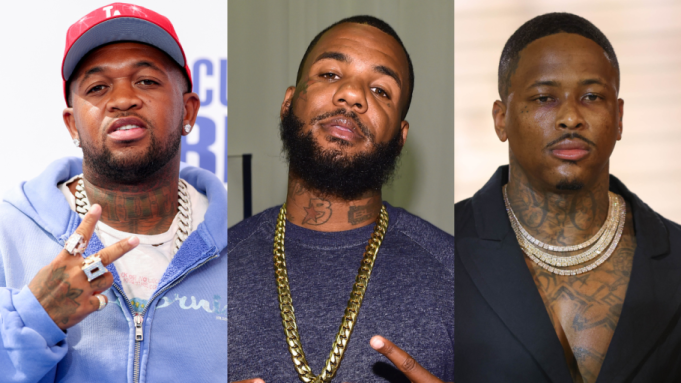
Few debates generate as much discussion among West Coast hip-hop fans as the question of who has carried California rap in the post-G-funk era. Two names consistently dominate that conversation: The Game and YG.
Both artists come from Compton. Both have released multiple platinum records. Both have represented Los Angeles on the world stage. Yet they arrived during different eras of hip-hop and built their careers in very different ways.
As fans continue imagining what a VERZUZ battle between the two would look like, the bigger question becomes clear: Who truly owns the modern West Coast legacy?
The Game: The Bridge Between Eras
When The Game emerged in 2005 with The Documentary, West Coast hip-hop was searching for a new leader.
After the dominance of artists like Dr. Dre, Snoop Dogg, Ice Cube, and Tupac, California had lost much of its commercial momentum. The Game helped change that almost overnight.
Working alongside Dr. Dre and 50 Cent, he delivered an album that blended modern production with classic West Coast storytelling. Songs such as “Hate It or Love It,” “How We Do,” “Dreams,” and “Put You on the Game” became defining records of the mid-2000s.
Over the next two decades, The Game built one of the strongest catalogs in West Coast rap.
YG: The Sound of a New Generation
Nearly a decade later, YG arrived with a completely different energy.
His debut album, My Krazy Life, captured contemporary Los Angeles street culture with remarkable authenticity. Records like “My Nigga,” “Who Do You Love?,” “Left, Right,” “Twist My Fingaz,” and “Big Bank” helped introduce a new generation to California rap.
Rather than recreating the early 2000s, YG modernized West Coast music while keeping its identity intact.
His success proved that regional sounds could still compete nationally.
Catalog vs. Cultural Impact
A VERZUZ battle is rarely decided by sales alone.
Instead, fans judge influence, replay value, iconic moments, and cultural significance.
The Game arguably has the deeper catalog. His discography stretches across two decades and includes collaborations with nearly every major figure in hip-hop.
YG, however, arguably owns more defining records for listeners who grew up during the 2010s.
His music became the soundtrack to a generation of California rap fans.
Who Represents Los Angeles Better?
Representation has always mattered in hip-hop.
The Game built his reputation by constantly referencing Compton’s history while paying tribute to the legends who came before him.
YG took a different approach.
Rather than looking backward, he focused on documenting contemporary street life, fashion, slang, and culture.
Both approaches are authentic.
One preserves history.
The other captures the present.
Influence on Today’s Artists
The Game influenced many lyricists who followed his rise in the 2000s.
YG’s impact is visible in a newer generation of California artists who adopted his production style, visual aesthetics, and approach to representing Los Angeles.
Together, they helped ensure the West Coast remained relevant during two very different periods of hip-hop.
How a VERZUZ Could Play Out
If the two artists ever stepped onto the VERZUZ stage, fans could expect an unforgettable celebration of California rap.
Potential standout records might include:
The Game
- Hate It or Love It
- How We Do
- Dreams
- Ali Bomaye
- My Life
- One Blood
- Wouldn’t Get Far
- Westside Story
- 100
- El Chapo
YG
- My Nigga
- Who Do You Love?
- Left, Right
- Twist My Fingaz
- Big Bank
- FDT
- Go Loko
- Suu Whoop
- Why You Always Hatin?
- State of Emergency
Rather than producing a clear winner, the battle would likely become a celebration of two different generations of West Coast rap.
Final Verdict
Determining who owns the modern West Coast legacy ultimately depends on how that legacy is defined.
If longevity, lyrical ability, and catalog are the deciding factors, The Game presents a compelling case.
If cultural relevance, consistency during the streaming era, and influence on today’s California sound matter most, YG has a strong argument.
Perhaps the real answer is that West Coast hip-hop needed both artists.
The Game helped restore California’s national presence during the mid-2000s.
YG ensured that momentum continued into the next decade by introducing a fresh generation to authentic Los Angeles rap.
Rather than choosing one over the other, fans can appreciate how each artist contributed to preserving and expanding the legacy of West Coast hip-hop.
And if a VERZUZ battle ever becomes reality, it would undoubtedly be one of the biggest celebrations of California rap in recent memory.